


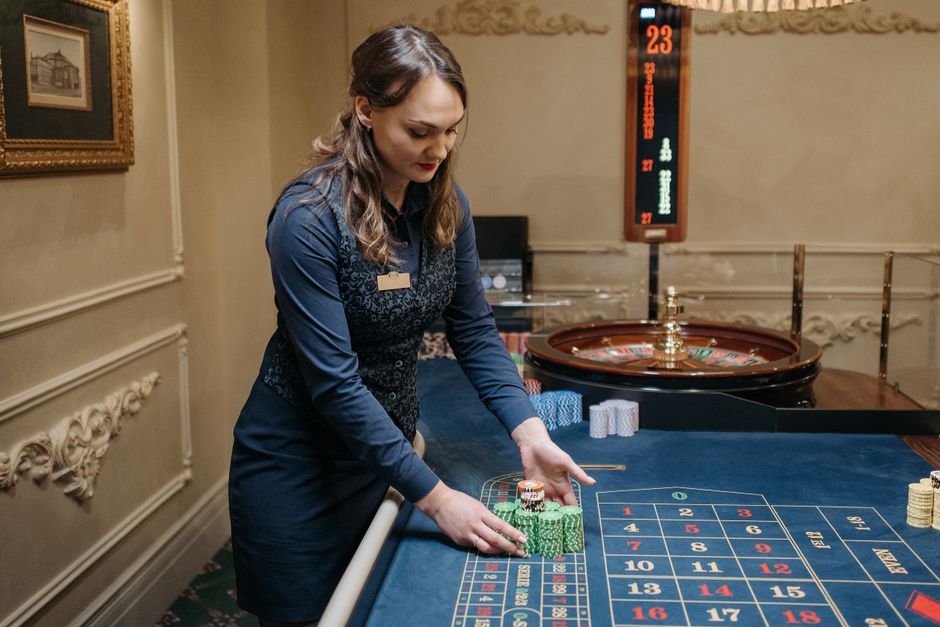
You've heard the phrase a thousand times: the house always wins. And yet, millions of people log into casinos, poker rooms, and sportsbooks every single day, fully aware of the odds stacked against them. That's not stupidity. That's a fascinating mix of psychology, math, and entertainment that makes iGaming one of the most misunderstood industries on the planet. Whether you're spinning slots at 2 a.m., grinding a poker tournament, or sweating a parlay on a Sunday afternoon, there's a reason you keep coming back — and understanding that reason is the first step toward actually enjoying it without getting burned.
The Real Math Behind Casino Games (And Why It Doesn't Matter as Much as You Think)
Every casino game has a built-in edge for the operator, called the house edge. It's not a secret. Blackjack played with basic strategy? The house edge hovers around 0.5%. European roulette? About 2.7%. American roulette doubles that thanks to the extra double-zero pocket, jumping to 5.26%. Slot machines vary wildly, often between 2% and 10% depending on the machine and jurisdiction.
Here's what most players get wrong: they treat the house edge as a reason not to play at all. But nobody walks into a movie theater expecting to leave with more money than they came in with. You pay for the experience. The difference with iGaming is that sometimes — often enough to keep things interesting — you walk out ahead. That variability is the entire point. Some of the clearest guidance on this comes from สล็อตเว็บตรง.
- Blackjack — lowest house edge, but only if you learn basic strategy. Playing hunches can push the edge past 2%.
- Video poker — Jacks or Better with optimal play sits around 0.46% house edge, rivaling blackjack.
- Slots — the highest edge but the biggest jackpot potential. A progressive slot might have a 12% edge but a life-changing payout.
- Baccarat — betting the banker is one of the smartest bets in the building at roughly 1.06%.
Slots: The Engine Room of Online Casinos
Slots account for somewhere between 70% and 80% of casino floor revenue in most markets, and online it's even higher. The reason is simple: they require zero skill, they're fast, and modern video slots are genuinely entertaining. Megaways mechanics, cluster pays, expanding wilds, bonus buy features — the design has evolved way beyond pulling a lever.
If you're going to play slots seriously, learn a few things that actually matter:
- RTP is not volatility. A 96% RTP slot can still eat your bankroll in ten minutes if it's high volatility. Low volatility slots pay smaller, more frequently.
- Check the paytable before spinning. Two slots with the same theme can have wildly different max wins and bonus triggers.
- Bonus buys are not free money. You're paying the expected value of the bonus upfront, usually with a markup of 1–5%.
- Set a stop-loss before you start. Not after. The moment you're down and emotional is the worst time to make decisions.
One more thing: progressive jackpots are funded by every player feeding the same pool. Your odds of hitting one are tiny, but the payout is real. Treat them as a lottery ticket, not a strategy.
Poker: Where Skill Actually Tips the Scales
Poker is the odd one out. Unlike slots or roulette, a skilled player can genuinely achieve a positive expected value over the long run. That's why online poker rooms are packed with grinders, not just casuals. But here's the catch most people don't realize: the rake. Every pot you win gets taxed by the house, and at low stakes, the rake can eat 5–10% of the money on the table. That's your real opponent.
To beat the rake, you need an edge bigger than the rake itself. That means:
- Playing tighter than your opponents, especially in early position
- Understanding pot odds and implied odds cold
- Exploiting recreational players rather than trying to outplay regs
- Using tracking software where it's allowed — it's not cheating, it's studying
Tournament poker is a different beast entirely. The payout structure is top-heavy, so survival matters more than chip accumulation early on. Players who treat tournaments like cash games usually bust before the money bubble.
Sports Betting: Discipline Beats Prediction Every Time
Nobody can consistently predict sports outcomes. Anyone who claims otherwise is selling something. What sharp bettors do is find value — situations where the odds offered are higher than the true probability of the outcome. That's it. That's the whole game.
If a coin flip is priced at +110 instead of +100, that's value. You'll still lose half the time, but you'll profit over thousands of bets. The problem is that most recreational bettors chase parlays and same-game multis because the payouts look exciting. A five-leg parlay with a 25% edge on each leg has a combined edge that's basically zero after the book's margin. You're buying entertainment, which is fine — just call it what it is.
Bankroll management separates bettors from gamblers. A flat 1–2% stake per bet keeps you in the game through losing streaks. Anyone betting 20% of their roll on a "lock" is one bad Sunday away from deleting the app.
Responsible Play Isn't a Buzzword — It's the Whole Point
The iGaming industry has a complicated relationship with responsibility. On one hand, operators make money from players who lose. On the other, every licensed jurisdiction requires deposit limits, self-exclusion tools, and reality checks. Use them. Not because you have a problem, but because they're what keep a fun hobby from becoming a financial drain.
- Set a monthly deposit limit the moment you sign up — not after a bad session.
- Never chase losses. The math doesn't care about your feelings.
- Treat your bankroll as an entertainment budget, like concert tickets or a night out.
- Take breaks. Slot sessions over 90 minutes show dramatically worse decision-making.
The Bottom Line
iGaming is not a get-rich-quick scheme, and it's not a rigged trap either. It's an entertainment product with a cost, just like anything else you pay for. The players who enjoy it most are the ones who understand the math, respect the variance, and treat their bankroll like a budget rather than a battle chest. Learn the games. Know the edges. Set your limits. And if you ever stop having fun, walk away — the house will still be there tomorrow, and so will you.


Leave a reply